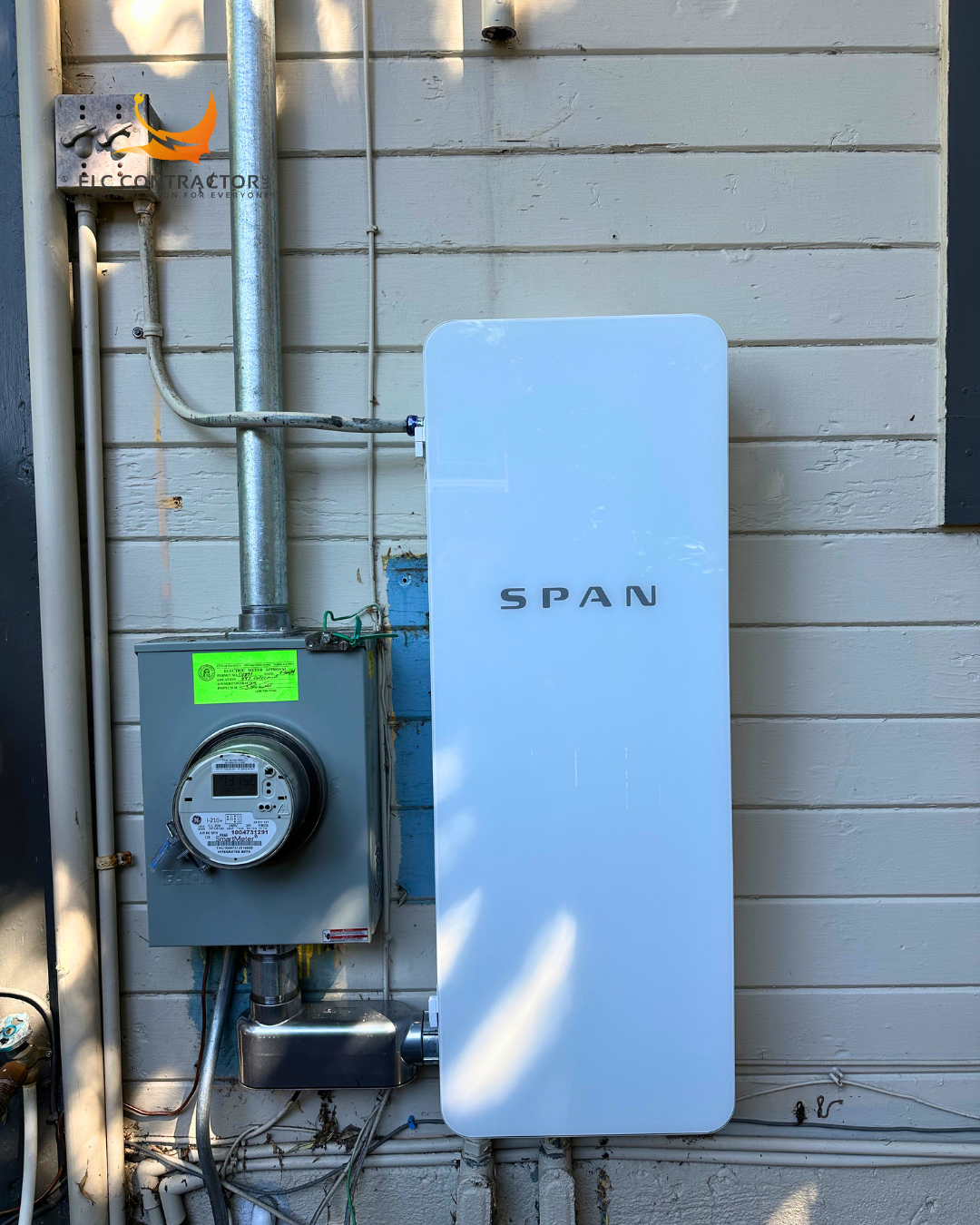
Understand individual circuits
View how major circuits contribute to household electricity use instead of seeing only one total on the utility bill.

Smart electrical infrastructure • Bay Area
A smart panel should support the way your home is being electrified—not simply replace equipment.
SPAN combines the role of a modern electrical panel with circuit-level visibility and selective load control. It can be a strong fit when planning EV charging, heat pumps, solar, battery storage, or several new electric loads. Before recommending it, ELC reviews the existing service, the planned equipment, and the homeowner’s priorities. Load management may help in some projects, but every home still requires a site-specific evaluation and a code-compliant design.
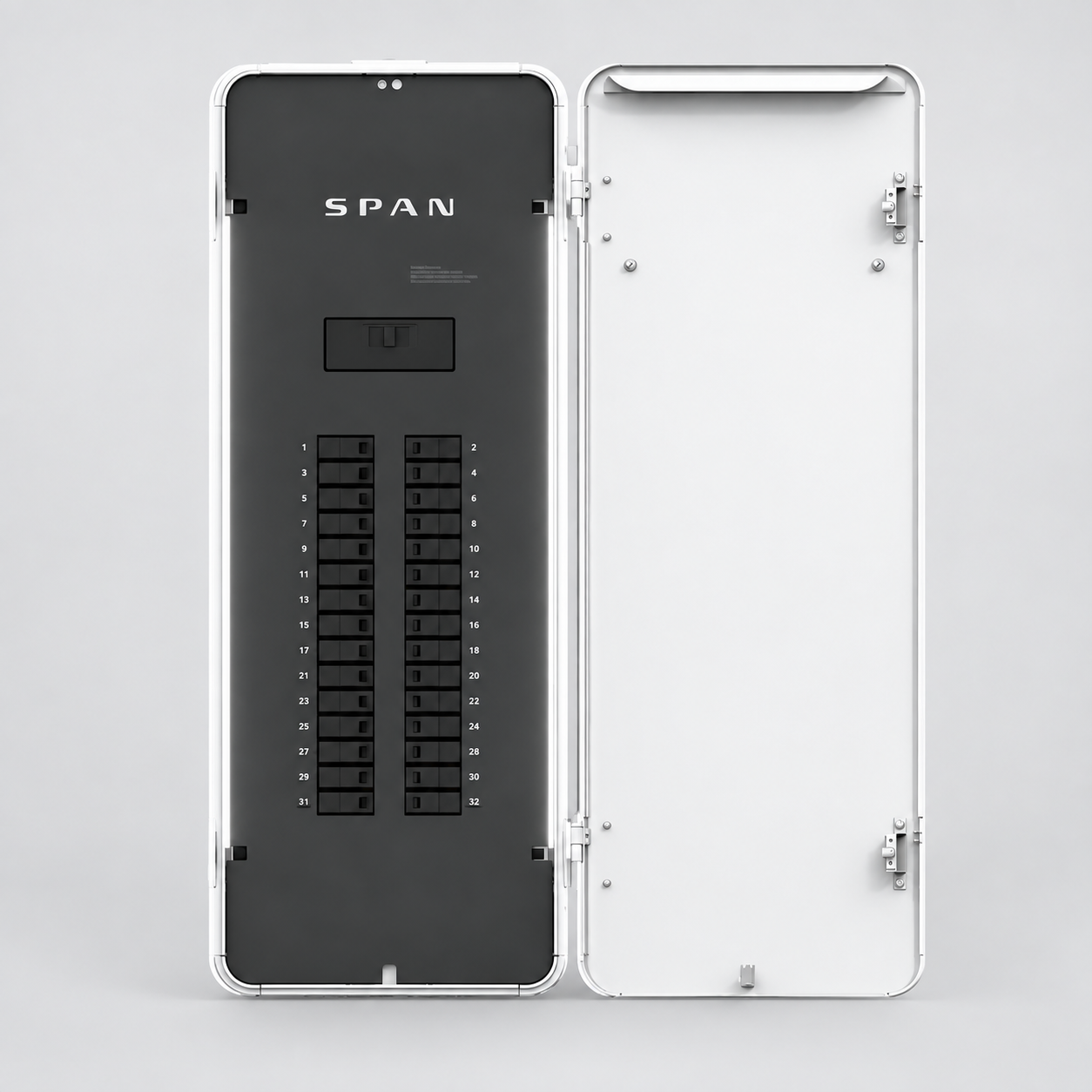
What changes with SPAN
The value is not limited to replacing an old panel. A properly planned SPAN installation can make household energy use easier to understand and help coordinate new electrical equipment as the home evolves.
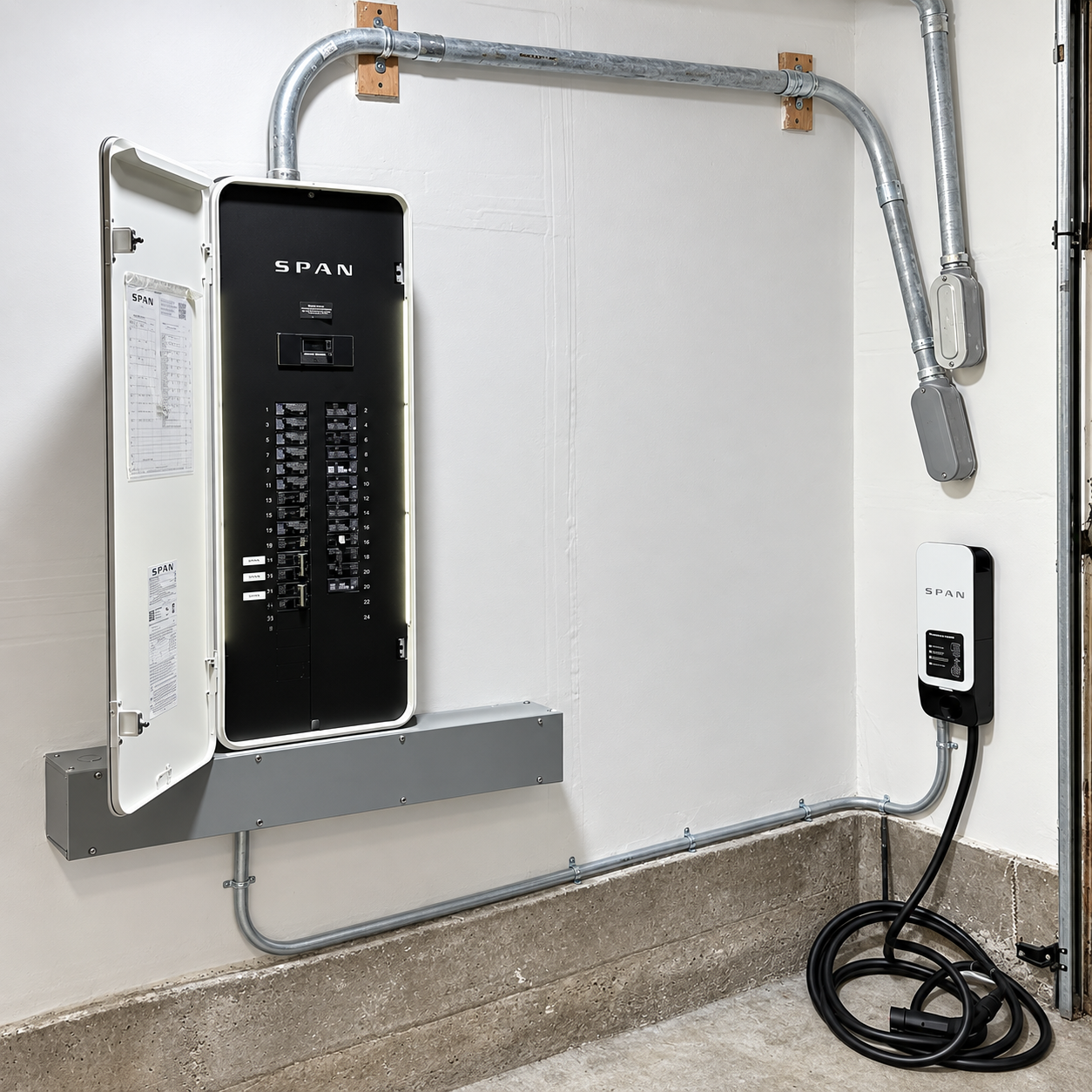
This completed Bay Area installation includes both a SPAN smart electrical panel and SPAN Drive, a Level 2 home EV charger designed to work with the panel rather than operate as a standalone charger.
SPAN Panel provides circuit-level energy monitoring and control through the SPAN Home App. When paired with SPAN Drive, the system can coordinate electric-vehicle charging with real-time household demand and adjust the available charging rate as other loads change.
View how major circuits contribute to household electricity use instead of seeing only one total on the utility bill.
Monitor and control eligible circuits through the SPAN system after correct installation, setup, and commissioning.
Plan EV charging, heat pumps, electric cooking, solar, batteries, and other significant loads around the home’s available capacity.
When paired with a compatible energy-storage system, circuit priorities can help direct backup power toward the loads that matter most.
Create a clearer path for upcoming electrical upgrades without treating every future appliance as a separate planning decision.
Careful circuit identification and labeling give the homeowner a more useful picture of the actual electrical system.
Is a smart panel the right fit?
SPAN makes the most sense when it solves a specific capacity, visibility, or energy-management need. During a free on-site estimate, we review the existing service and the equipment you want to add before recommending the right panel scope.
Design before equipment
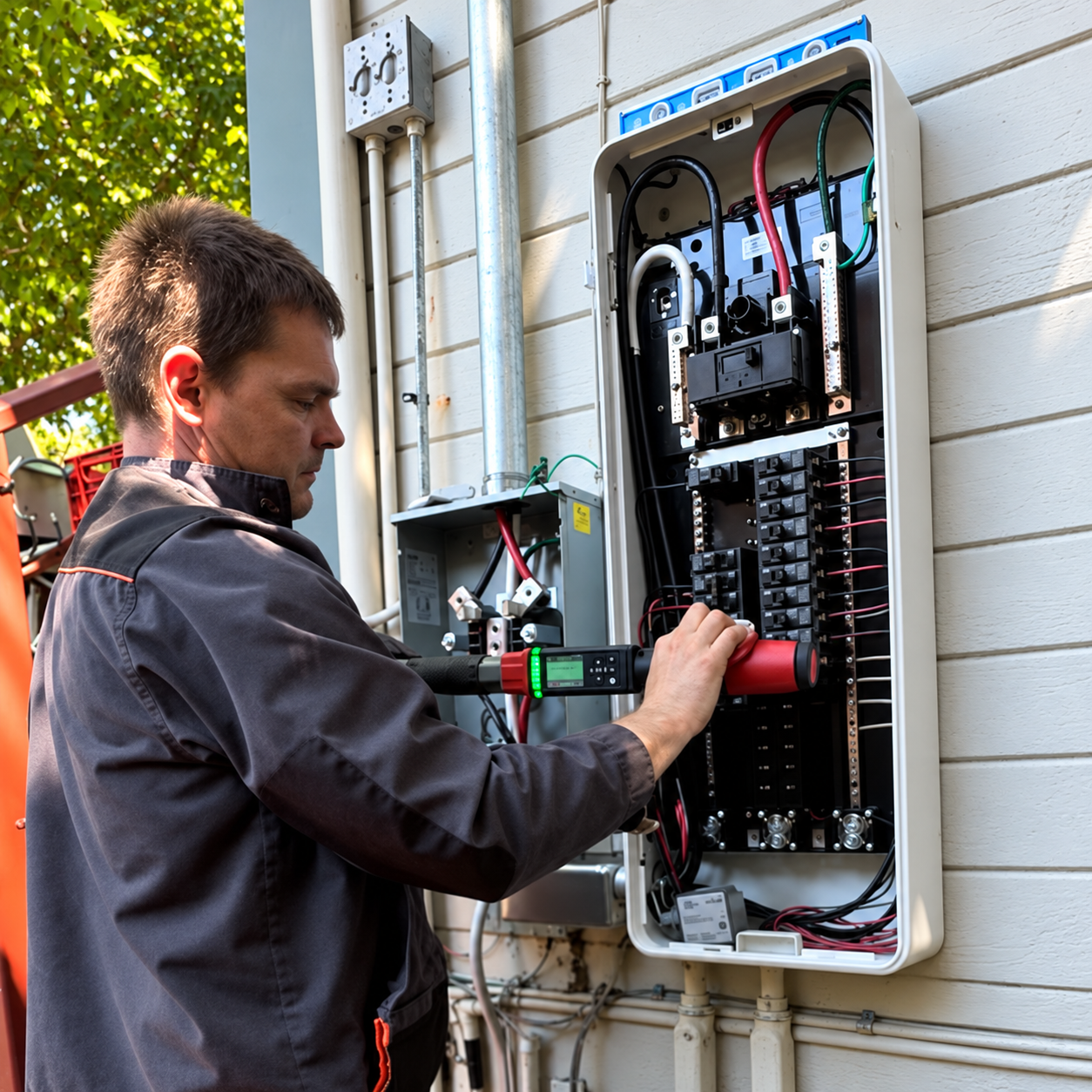
The correct SPAN configuration depends on much more than product preference. ELC evaluates the existing electrical system, future equipment, installation location, and approval requirements before the panel is ordered.
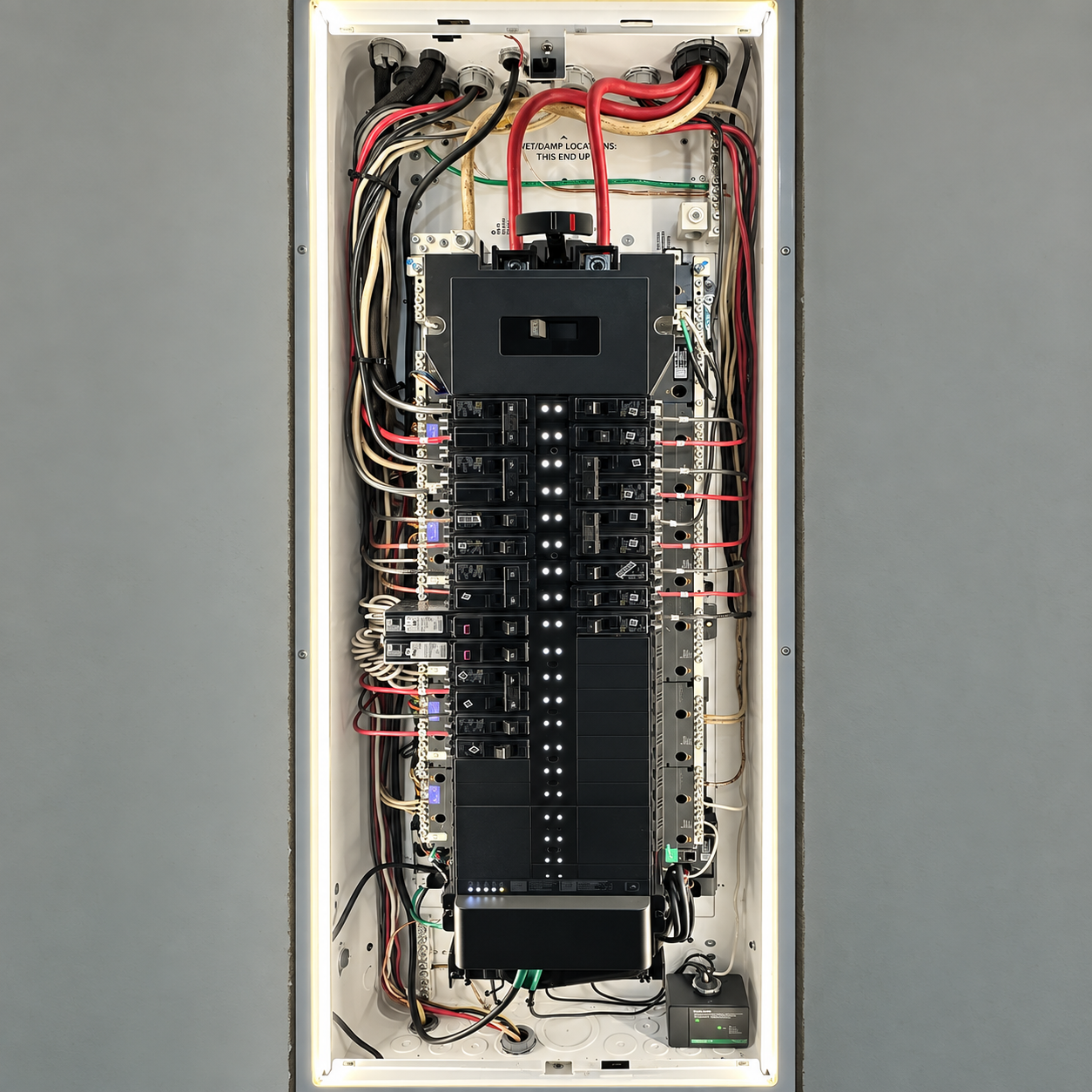
We verify the service rating, meter arrangement, grounding, conductor path, available space, and whether the new equipment will serve as the main panel or a subpanel.
EV charging, HVAC, water heating, cooking, solar, batteries, ADUs, and other planned loads are considered together—not one project at a time.
We review active circuits, subpanels, multi-wire branches, unidentified breakers, and any circuits that require field verification or correction.
Indoor or outdoor conditions, working clearances, conduit entry, mounting surface, internet access, and homeowner app setup affect the finished installation.
A panel change, service alteration, relocation, solar or battery integration, and remodel work can follow different permit, inspection, shutdown, and utility paths.
Traditional panel or SPAN?
Both options can distribute electricity safely when they are correctly designed and installed. The better choice depends on whether circuit-level information, controllable loads, EV charging coordination, and future energy projects create meaningful value for the property.
The project is a straightforward replacement and the home’s planned electrical demand fits comfortably within the available service.
The homeowner wants a clearer view of energy use or needs to coordinate several high-demand electrical loads as the home changes.
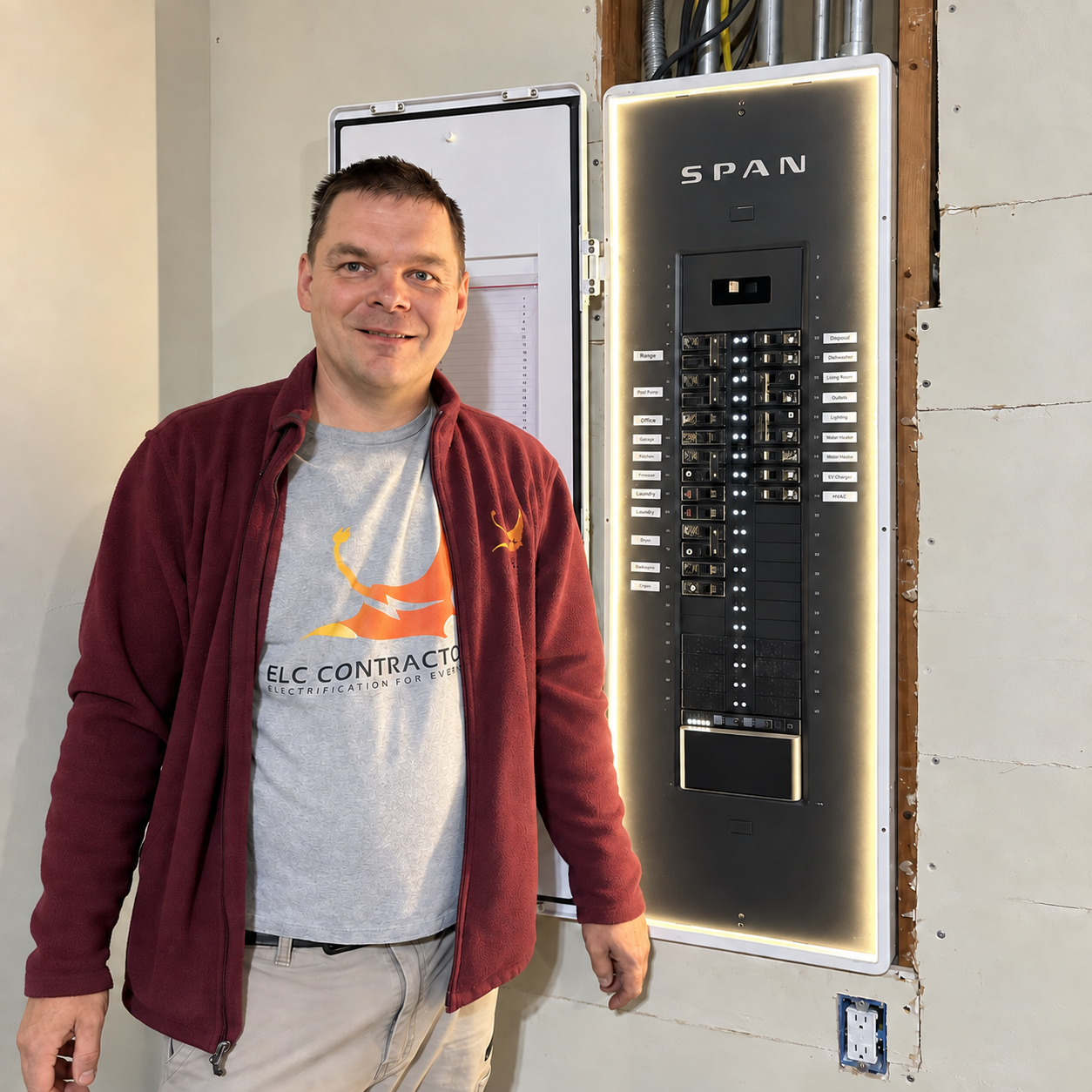
SPAN equipment must be installed and commissioned in accordance with the manufacturer’s current requirements. The final scope must also follow the approved electrical design, local code, permit conditions, utility requirements, and equipment documentation.
SPAN installation workflow
A successful smart-panel project begins before installation day. We define the electrical scope, coordinate approvals, organize the circuits, and complete system setup so the homeowner receives a usable—not merely mounted—SPAN system.
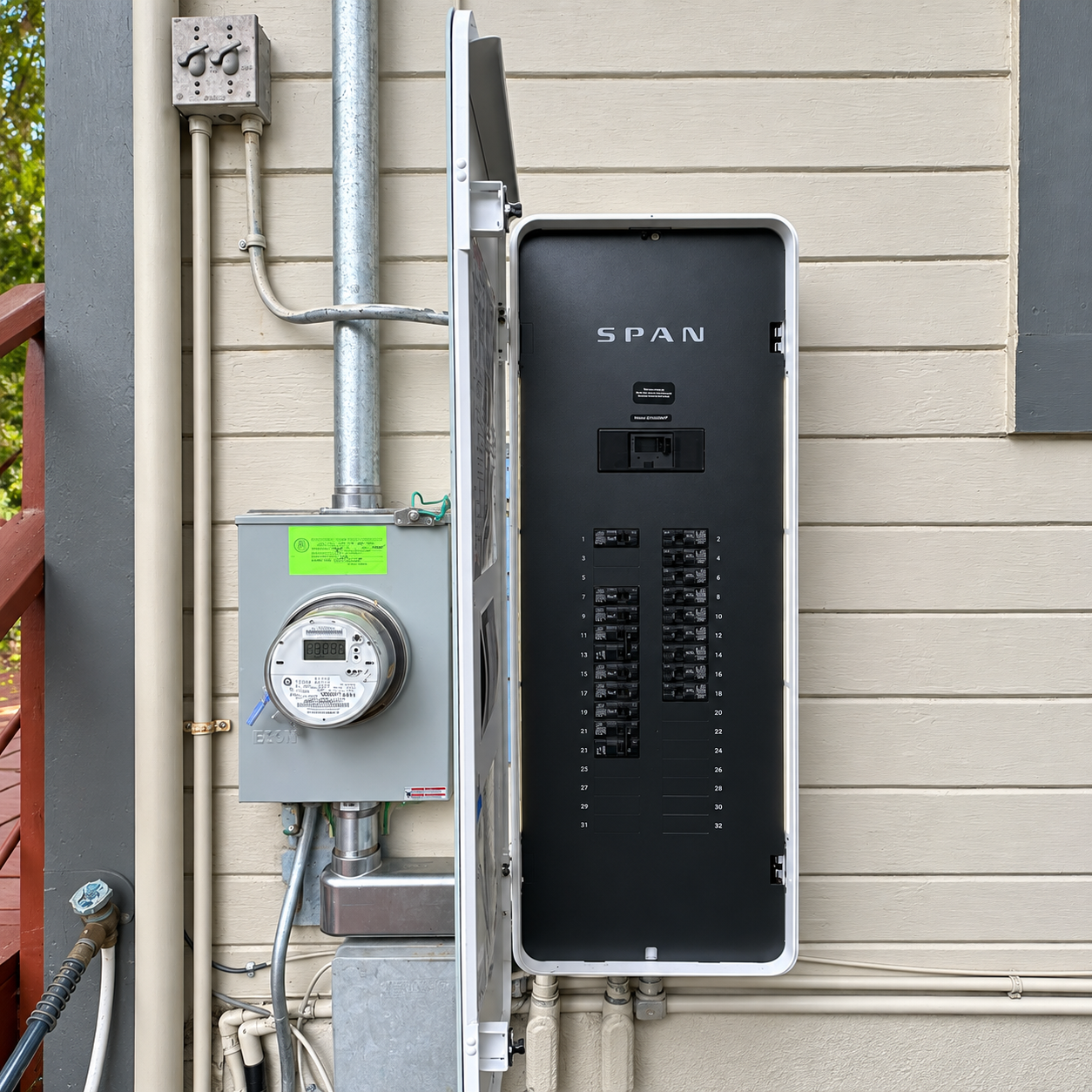
We review the existing service, panel condition, circuit count, installation location, major loads, future plans, and available project documentation.
Panel configuration, load calculations, permits, utility coordination, equipment requirements, and the shutdown plan are confirmed before installation.
Circuits are transferred deliberately, identified, labeled, and checked while the new panel, conductors, and related equipment are installed.
The system is commissioned, connected to the homeowner experience, and reviewed so circuit names, controls, monitoring, and priorities make sense.
SPAN AUTHORIZED INSTALLER TRAINING
ELC Contractor is proud to have an electrician who completed SPAN Authorized Installer Training. This specialized training supports thoughtful system planning, professional panel installation, accurate circuit mapping, commissioning, and a clear homeowner handoff.
For Bay Area homeowners, that means the smart-panel project is approached as a complete electrical system—from the existing service and future loads to the final setup of monitoring and controls.

CLEAR PROJECT SCOPING
The panel is only one part of the investment. A useful proposal accounts for the existing electrical system, the selected equipment, required approvals, and the finish work needed to deliver a complete installation.
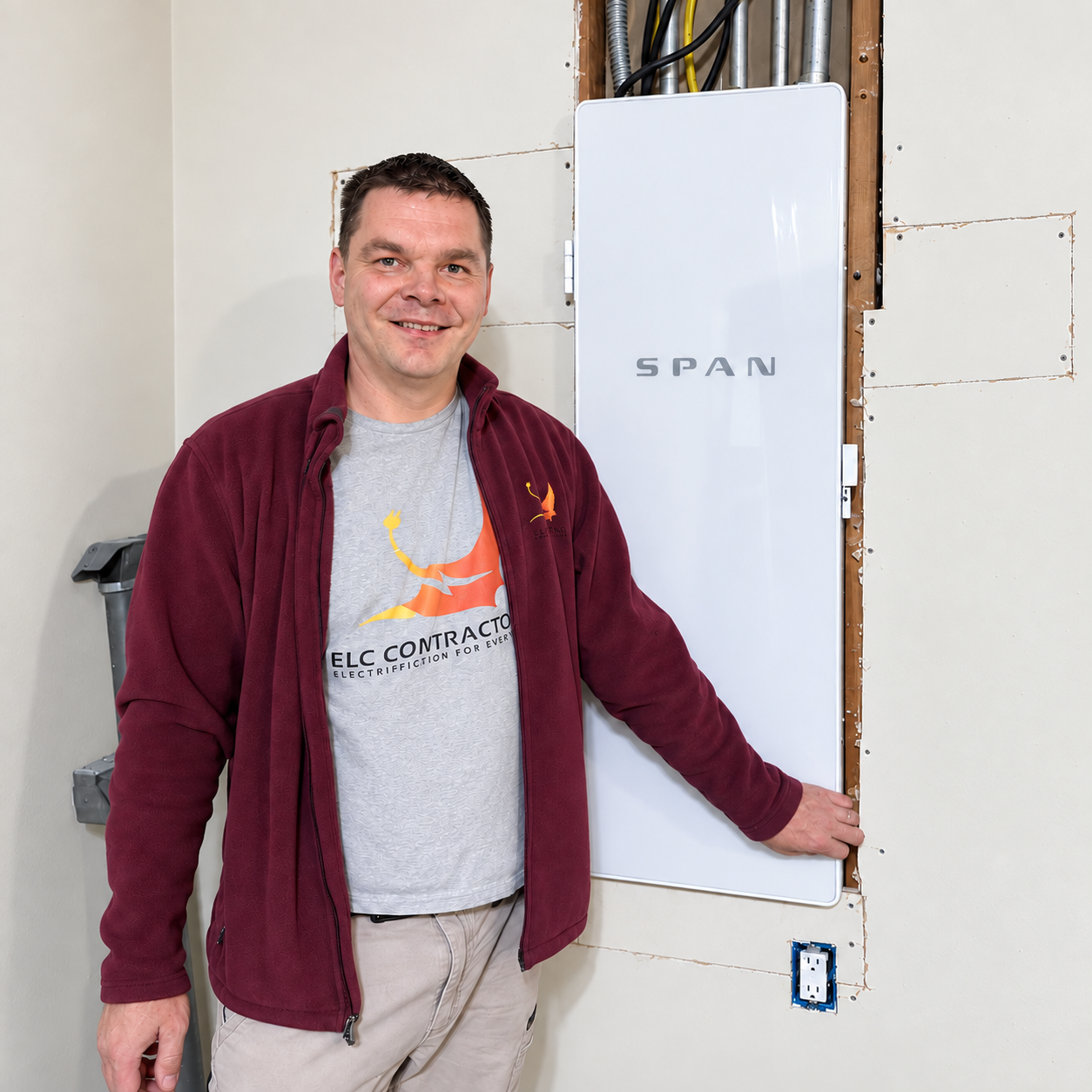
The selected SPAN model, related manufacturer equipment, and whether it serves as the main panel or a downstream panel affect the design.
Service rating, meter arrangement, relocation, conductor work, and utility requirements can change the project scope.
Circuit count, crowded wiring, needed repairs, subpanel changes, labeling, and circuit verification all require field review.
Indoor or outdoor placement, conduit routes, mounting surfaces, wall repair, trenching, and access conditions influence labor and finish work.
Permit review, inspections, utility involvement, and coordination with EV charging, solar, or battery systems affect timing and cost.
Circuit mapping, system setup, testing, app connection, and homeowner orientation are part of a properly completed smart-panel project.
SPAN SMART PANEL FAQ
These are common questions from Bay Area homeowners considering circuit-level monitoring, EV charging, battery storage, solar, and future electrification.
FREE ON-SITE SPAN ASSESSMENT